





The Lucky Edit by Do.Dreamss
Artisan Jewelry Techniques: How Skilled Hands Make Unique Pieces
Artisan jewelry represents the beautiful convergence of skill, tradition, and personal expression. Unlike mass-produced pieces that populate department store counters, each handcrafted creation tells a story—of ancient techniques preserved through generations, of materials thoughtfully selected and transformed, and of an artisan's dedication to their craft. These unique adornments have captivated humans for centuries, not merely as decorative objects but as wearable art that connects us to cultural heritage and individual creativity.
Throughout this exploration of artisan jewelry techniques, you'll discover the foundational methods that distinguish handmade pieces, the time-honored metalworking traditions that continue to thrive today, the colorful artistic expressions that bring designs to life, how personalization elevates these creations, and why artisan approaches often represent more sustainable choices in the jewelry world.
The foundations of artisan jewelry: Tools, materials, and philosophy
At the heart of every handcrafted jewelry piece lies a commitment to excellence that begins with the basic elements of creation. Master jewelers rely on specialized tools—some virtually unchanged for centuries—to transform raw materials into wearable art.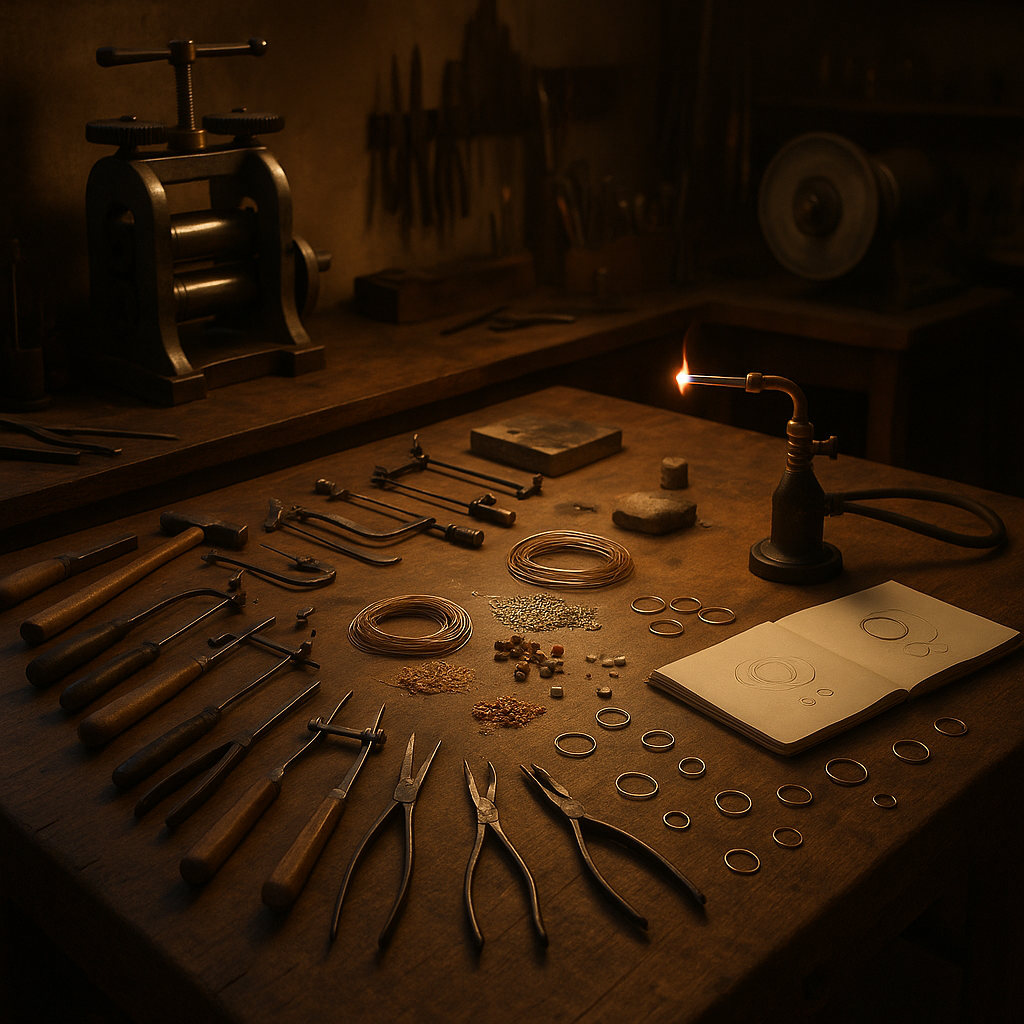
The artisan's workshop typically houses an array of precision implements: delicate hammers for texturing metal surfaces, torch setups for soldering components together, fine-tipped pliers for manipulating wire, and jeweler's saws for intricate cutwork. More specialized equipment might include rolling mills for creating metal sheet, polishing wheels for achieving lustrous finishes, and magnification devices for executing the most detailed work.
Materials selection represents another critical foundation of craftsmanship. While precious metals like gold, silver, and platinum remain staples, many contemporary creators incorporate alternative elements including copper, brass, bronze, titanium, and even reclaimed metals. Gemstones—whether precious, semi-precious, or artistically created—add color and dimension. Additional materials ranging from glass to ceramic, wood to fabric, all expand the artist's palette.
Beyond tools and materials, the craftsman's philosophy distinguishes genuine artisan work. This ethos embraces several core principles:
- patience and presence throughout the creation process
- commitment to quality over quantity
- respect for tradition while embracing innovation
- dedication to mastering techniques through years of practice
- attentiveness to detail invisible to casual observation
This foundation of dedicated craftsmanship creates pieces that stand apart from mass-produced alternatives—not just in appearance but in substance, durability, and inherent value.
Timeless metalworking techniques: From forging to filigree
Metalwork forms the backbone of most handcrafted jewelry traditions, with techniques refined over thousands of years still practiced in studios worldwide.
Forging—the process of shaping metal through hammering—creates forms impossible to achieve through casting alone. Artisans can develop distinctive textures, control metal thickness with precision, and build structural integrity through work-hardening. A master metalsmith might spend hours hammering a single bracelet to achieve the perfect balance of flexibility and strength.
Soldering connects separate metal components into unified designs. Unlike gluing, which merely joins surfaces, proper soldering creates molecular bonds between metals. Skilled hands control torch flames with remarkable precision, heating pieces just enough to flow solder without melting the main components. This technique enables complex constructions featuring multiple elements while maintaining structural integrity.
Stamping and engraving offer contrasting approaches to surface decoration. Stamping impresses designs into metal using hardened tools and physical force, while engraving removes material to create recessed patterns. Both require steady hands, excellent visual judgment, and an understanding of how metal responds to pressure.
The art of filigree and cannetille
Perhaps no metalworking technique better exemplifies the heights of handcraft than filigree.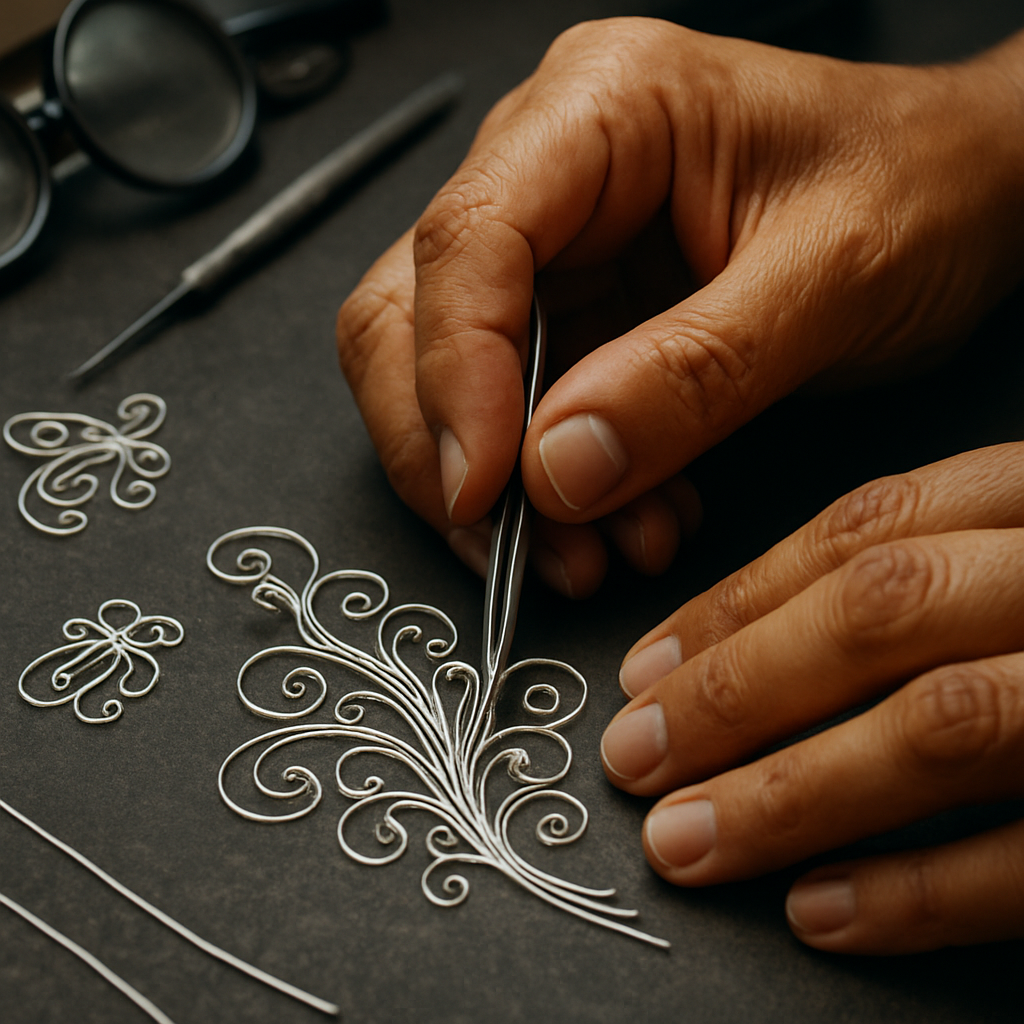
This ancient method involves twisting, curling, and arranging fine metal wires into intricate patterns, often resembling delicate lace. The wires—sometimes as thin as human hair—are carefully positioned and soldered to create open, airy designs with remarkable visual complexity.
Cannetille takes filigree further by adding dimensionality. While traditional filigree typically creates flat or gently curved surfaces, cannetille builds upward with coiled and scrolled wires. This technique, particularly popular during the Georgian and Victorian eras, produces bold, sculptural pieces with remarkable visual depth despite their lightweight construction.
Both methods require exceptional patience and dexterity. A single earring might contain dozens of individually shaped wire components, each requiring multiple steps to create and position. The resulting pieces showcase not just artistic vision but extraordinary manual control and technical mastery.
Colorful expressions: Enameling, gemstone setting, and glasswork
Handmade jewelry pieces achieve their distinctive character through color—applied through various decorative techniques that require specialized knowledge and methodical execution.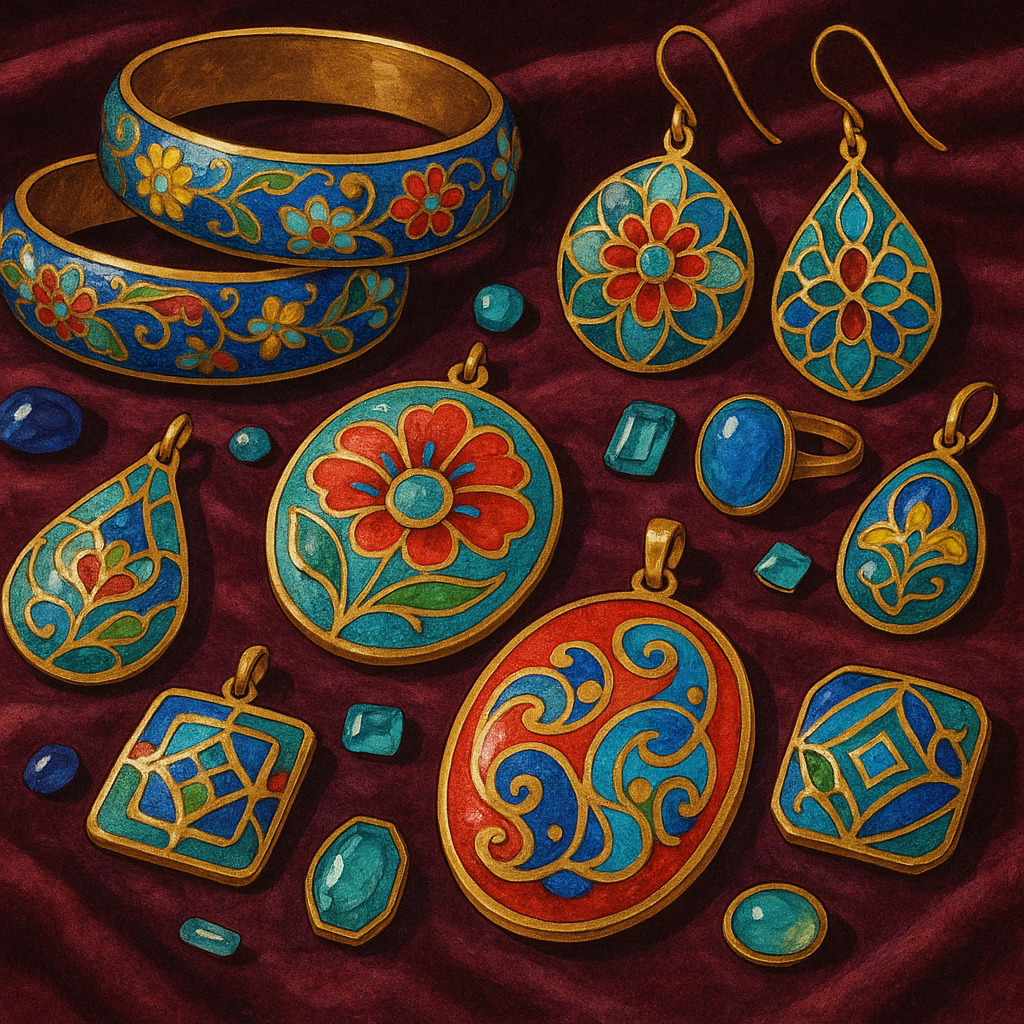
Enameling transforms jewelry through the application of colored glass powders fused to metal surfaces. Each enameling style offers unique artistic possibilities:
- Champlevé involves carving recessed areas in metal that are then filled with enamel, creating contrast between the metal and colorful inlays.
- Cloisonné uses thin metal wires to create cells (cloisons) that hold different enamel colors, allowing for intricate pictorial designs.
- Plique-à-jour, among the most challenging techniques, creates translucent, stained-glass effects by applying enamel between metal boundaries without a backing.
All enameling requires precise temperature control—too little heat fails to melt the glass properly, while excessive heat can burn the enamel or damage the metal structure. Master enamelists build knowledge through years of practice, learning to judge firing times by subtle color changes.
Gemstone setting represents another realm where manual dexterity meets artistic expression. Beyond basic prong and bezel settings, expert jewelers create mystery settings where no metal appears between stones, invisible settings where stones connect without visible support, and flush settings where gems sit perfectly level with surrounding metal. Each approach requires not just technical skill but an understanding of how light interacts with transparent materials.
Artisan glasswork adds another dimension through techniques like lampworking (melting glass rods in a torch flame to create beads and components) and fusing (heating compatible glass pieces until they melt together). Murano glass from Venice, with its centuries-old tradition, exemplifies how glassworking becomes high art when mastered. Contemporary makers often incorporate dichroic glass, which displays different colors depending on viewing angle, creating jewelry with remarkable visual depth.
Personalization and storytelling: Customized, upcycled, and sentimental pieces
The ability to infuse personal meaning into wearable art distinguishes handcrafted jewelry in particularly meaningful ways.
Custom settings allow individuals to transform personal materials into new treasures. Many artisans specialize in working with client-provided elements—whether heirloom diamonds from a grandmother's ring, pearls from a treasured necklace, or even gemstones purchased during special travels. This collaborative process requires special sensitivity; the maker must understand not just technical requirements but the emotional significance attached to these materials.
Upcycling and remounting breathe new life into jewelry that might otherwise remain unworn. A skilled artisan can reimagine outdated pieces while preserving their essential character—perhaps transforming a vintage brooch into a pendant, reconfiguring multiple inherited rings into a cohesive collection, or incorporating antique elements into contemporary designs. This approach honors heritage while creating pieces suited to current tastes and lifestyles.
Sentimental craftsmanship has deep historical roots. Victorian-era mourning jewelry often incorporated the hair of deceased loved ones, woven into intricate patterns and sealed beneath crystal. Miniature portraits painted on ivory or porcelain allowed people to keep loved ones close. Today's artisans continue this tradition of meaningful creation through fingerprint-embossed metals, handwriting-engraved pieces, and custom symbolic designs that commemorate life events.
The emotional resonance of personalized jewelry extends beyond materials to the creation process itself. Many collectors develop relationships with their favorite designers, commissioning pieces to mark significant moments or express personal values. These objects become wearable stories—physical manifestations of memories, relationships, and personal journeys.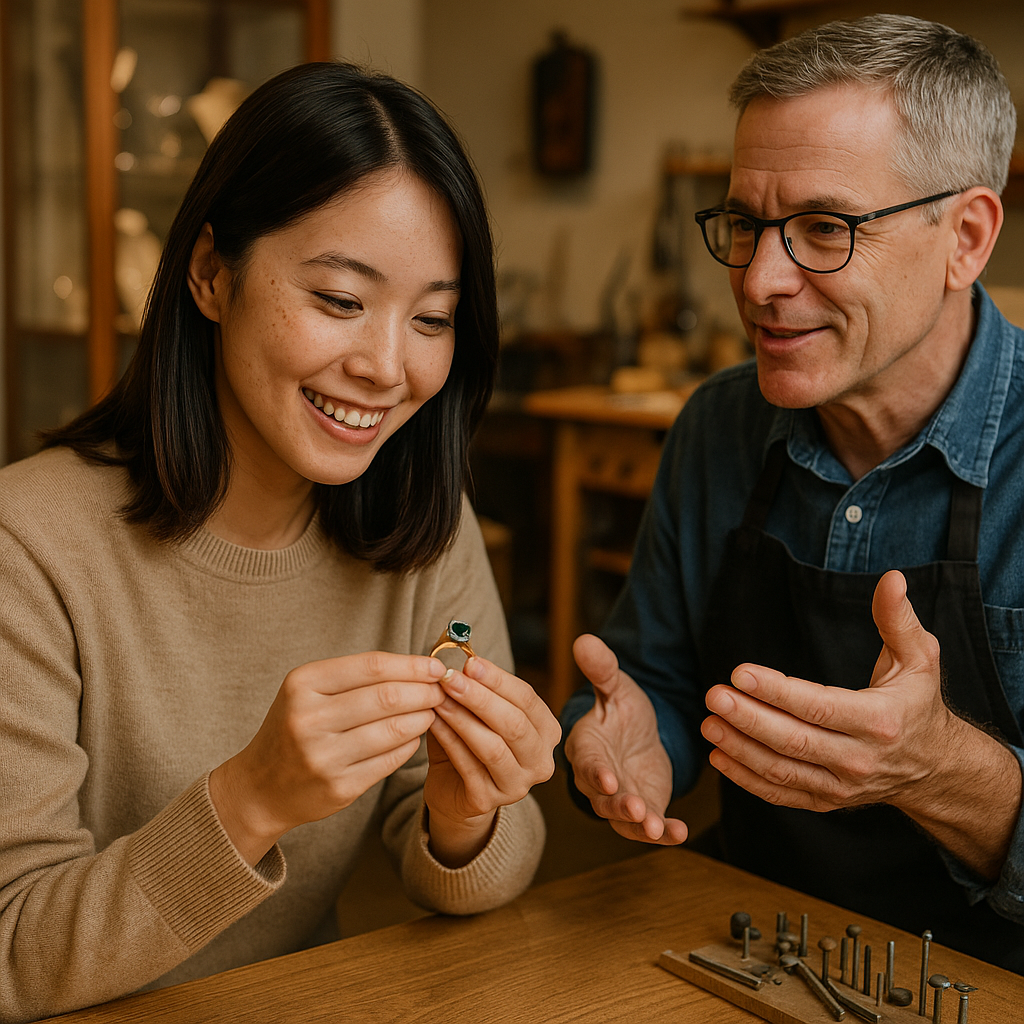
The sustainability edge: Ethical practices in artisan jewelry
Handcrafted jewelry offers environmental and social benefits that increasingly resonate with conscious consumers.
Recycled metals and stones represent a cornerstone of sustainable jewelry production. Many independent artisans specialize in working with reclaimed materials—melting down existing jewelry, using vintage components, or sourcing metals from certified recycled suppliers. This approach significantly reduces the environmental impact associated with mining while creating pieces of equal quality and beauty to those made with newly extracted materials.
Low-impact production characterizes most small-scale jewelry operations. While industrial manufacturing consumes substantial energy and often involves chemical processes with significant waste streams, hand fabrication typically requires minimal electricity and generates little pollution. Many boutique creators further minimize their footprint by choosing non-toxic alternatives to traditional chemicals, implementing water reclamation systems, and utilizing energy-efficient equipment.
Supporting local craftspeople strengthens communities economically while preserving cultural heritage. When consumers purchase from independent jewelers, they contribute to regional artistic ecosystems—helping maintain specialized skills that might otherwise disappear in our mass-production economy. Many regions have signature jewelry-making traditions that connect contemporary makers to centuries of artistic lineage, from Navajo silverwork to Florentine goldsmithing to Japanese Mokume Gane.
The transparency typical in artisanal production also benefits consumers. While large-scale jewelry operations often involve complex supply chains with limited visibility, handmade pieces typically come with clear provenance—buyers can learn exactly who created their jewelry, under what conditions, and with which materials. This direct connection between maker and wearer builds trust while ensuring ethical standards align with personal values.
Conclusion
The world of artisan jewelry techniques represents far more than decorative adornment—it embodies human creativity, cultural preservation, and personal expression. From the patient precision of filigree to the vibrant artistry of enameling, from the structural elegance of forged metals to the meaningful transformation of heirloom materials, handcrafted jewelry connects wearers to traditions spanning centuries while remaining vibrantly relevant today.
Each handmade piece carries within it countless hours of practice, accumulated knowledge, and focused attention. These qualities manifest in details that mass production simply cannot replicate—the perfectly balanced tension of a hand-twisted wire, the distinctive hammer marks that catch light in unexpected ways, or the thoughtful integration of materials with special significance.
As we increasingly value authenticity in our possessions, artisan jewelry offers something genuinely precious: objects made with human hands, reflecting human stories, and designed to last through generations. Whether seeking a meaningful gift, a personal talisman, or simply an object of beauty, exploring the world of handcrafted jewelry reveals treasures that transcend mere fashion to become part of our personal narratives.
FAQ
What makes artisan jewelry different from mass-produced jewelry?
Artisan jewelry is handcrafted by skilled makers, ensuring each piece is unique and often made with higher-quality, ethically-sourced materials. Unlike mass-produced pieces, handmade jewelry shows individual character through subtle variations, demonstrates greater attention to detail, and frequently incorporates traditional techniques that machines cannot replicate.
What are the most popular artisan jewelry techniques?
The most popular artisan jewelry techniques include filigree, enameling, metal forging, custom gemstone settings, beadwork, and glasswork like Murano or dichroic glass. Many contemporary artisans also specialize in mixed-media approaches that combine multiple techniques within single pieces.
Can I provide my own materials for a custom jewelry piece?
Yes, many artisans welcome heirloom stones or precious metals to incorporate into a new, personalized design. This practice, sometimes called "remodeling" or "resetting," allows meaningful materials to be transformed into contemporary pieces that honor their history while suiting current preferences.
Are artisan jewelry techniques more sustainable?
Often, yes—many artisans use recycled materials and minimize waste, making their practices more eco-friendly than mass production. Small-scale operations typically consume less energy, produce fewer pollutants, and maintain greater control over their supply chains, allowing for more environmentally conscious choices throughout the creation process.
How can I ensure a jeweler is truly using artisan techniques?
Ask about their process, look for signs of handcrafting (versus machined work), and seek recommendations or certifications from recognized artisanal groups or fair-trade organizations. Genuine artisans typically welcome questions about their techniques and can explain their specific approaches, training background, and the time involved in creating their pieces.